
A person spends about a third of their life sleeping, and high-quality sleep is one of the most important pillars of long-term health. While we often focus on factors like light, noise, and mattress comfort, one often-overlooked variable plays a critical role in how well we rest: the level of carbon dioxide (CO₂) in the air we breathe at night.
Why CO₂ Matters in Your Bedroom
As we sleep, we continuously exhale CO₂. In poorly ventilated spaces—especially bedrooms with closed doors and windows—CO₂ levels can gradually rise. This increase creates what many describe as a stuffy atmosphere, but the consequences go beyond mere discomfort.
Scientific studies have shown that elevated CO₂ concentrations during sleep are linked to shallower sleep, increased wakefulness, and reduced REM cycles. These disruptions mean you may wake up feeling tired, groggy, or unrested, even after spending a full night in bed.
The Real-Life Impact of Inefficient Ventilation
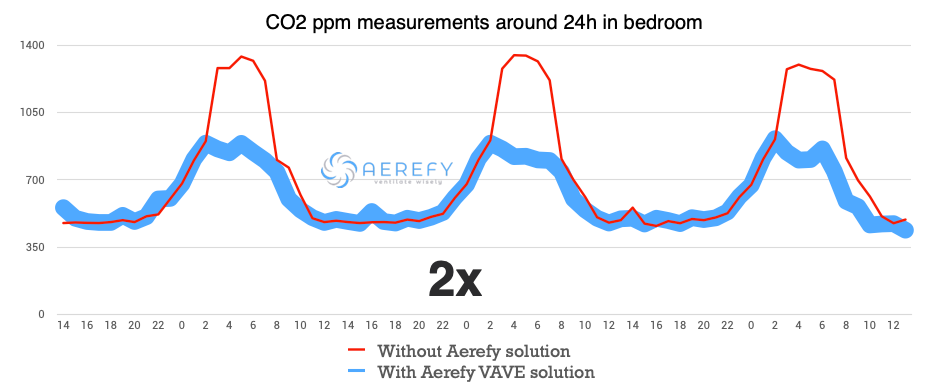
Fig 1. CO2 Measurement in the bedroom.
Aerefy ventilation solution also helps when ventilation central unit is underpowered. In fact, Aerefy reduces the total ventilation need by only ventilating areas with occupants.
The Aerefy Solution: Smart Ventilation with Purpose
Aerefy tackled the issue head-on by optimizing ventilation based on real-time air quality data. Instead of ventilating on a fixed schedule, Aerefy dynamically adjusts airflow based on actual CO₂ concentrations, especially during critical nighttime hours. Measurements prove it very effective.
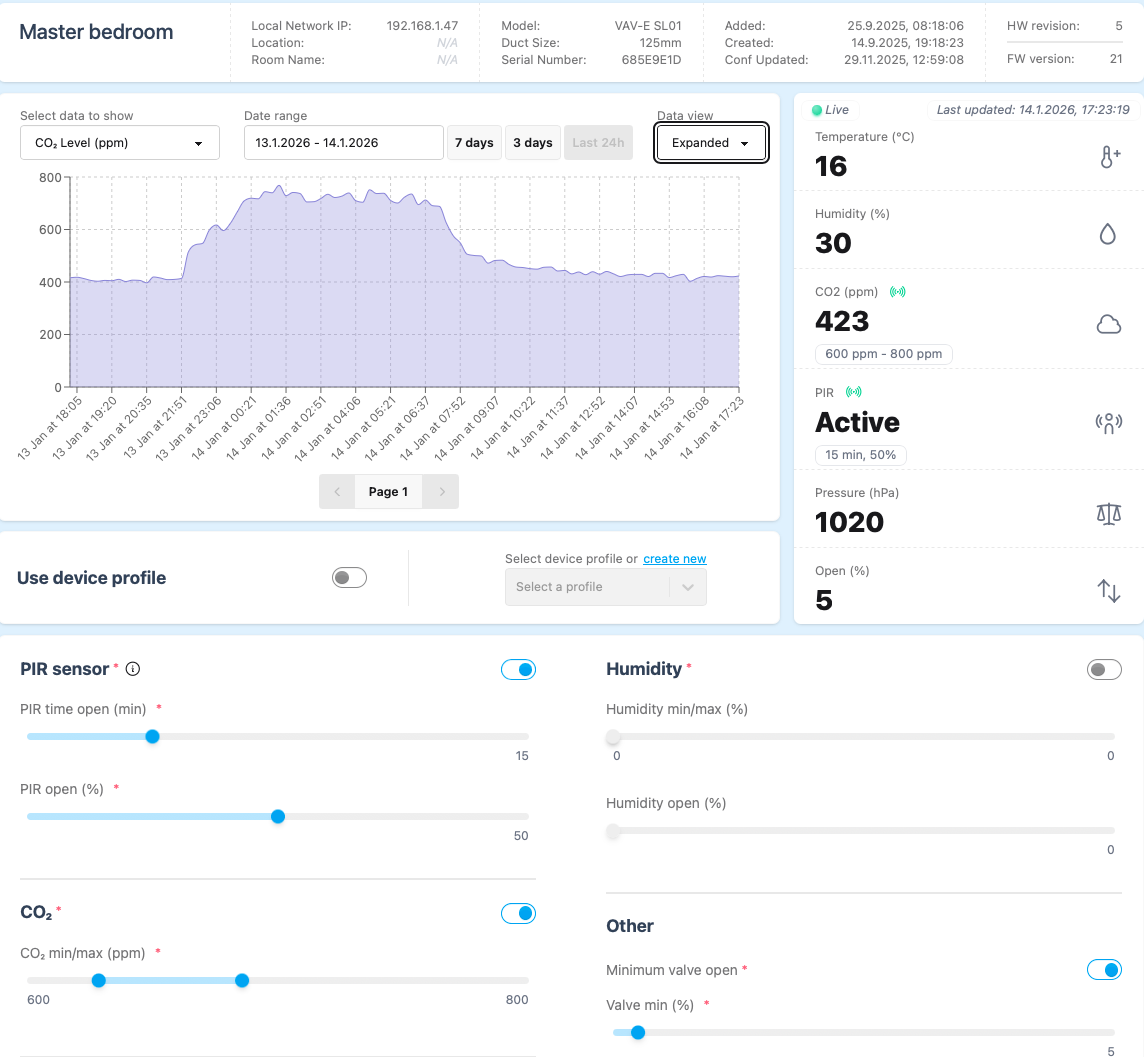

Fig 2. Measured CO2 levels during night
The result? Fresher bedroom air during sleep, a significant reduction in unnecessary ventilation during the day, and most importantly, improved sleep quality for the people inside.
Humidity levels are better too
In colder Nordic climates, maintaining acceptable indoor humidity levels can be a real challenge — and there’s no perfect solution.
Here are three common approaches:
- Humidifiers
Still the most effective way to improve indoor air quality. However, be sure to consider the costs and maintenance requirements before installing one. - Humidity recuperation in ventilation systems
This method has gained some popularity lately, but don’t be misled. Most humidity recovery systems return only a fraction of the moisture—typically ten times less than what a single person naturally produces. - Ventilate only when needed
An average person generates 3–5 liters of water per day through cooking, showering, watering plants, breathing, and doing laundry. Over-ventilating removes this valuable moisture. The most energy-efficient and effective approach is demand-based ventilation—just enough to keep VOC and CO₂ levels in check without drying out the air.
Restoring Balance for Better Sleep
This transformation illustrates a simple truth: better air means better sleep. With CO₂ levels under control, people reported fewer disturbances, more restorative sleep cycles, and better energy throughout the day.
If you’ve ever woken up in a room that felt “stale” or “heavy,” it might be more than just your imagination. Monitoring and managing indoor CO₂ is a practical, science-backed way to enhance your nightly rest and your long-term health.